Formto
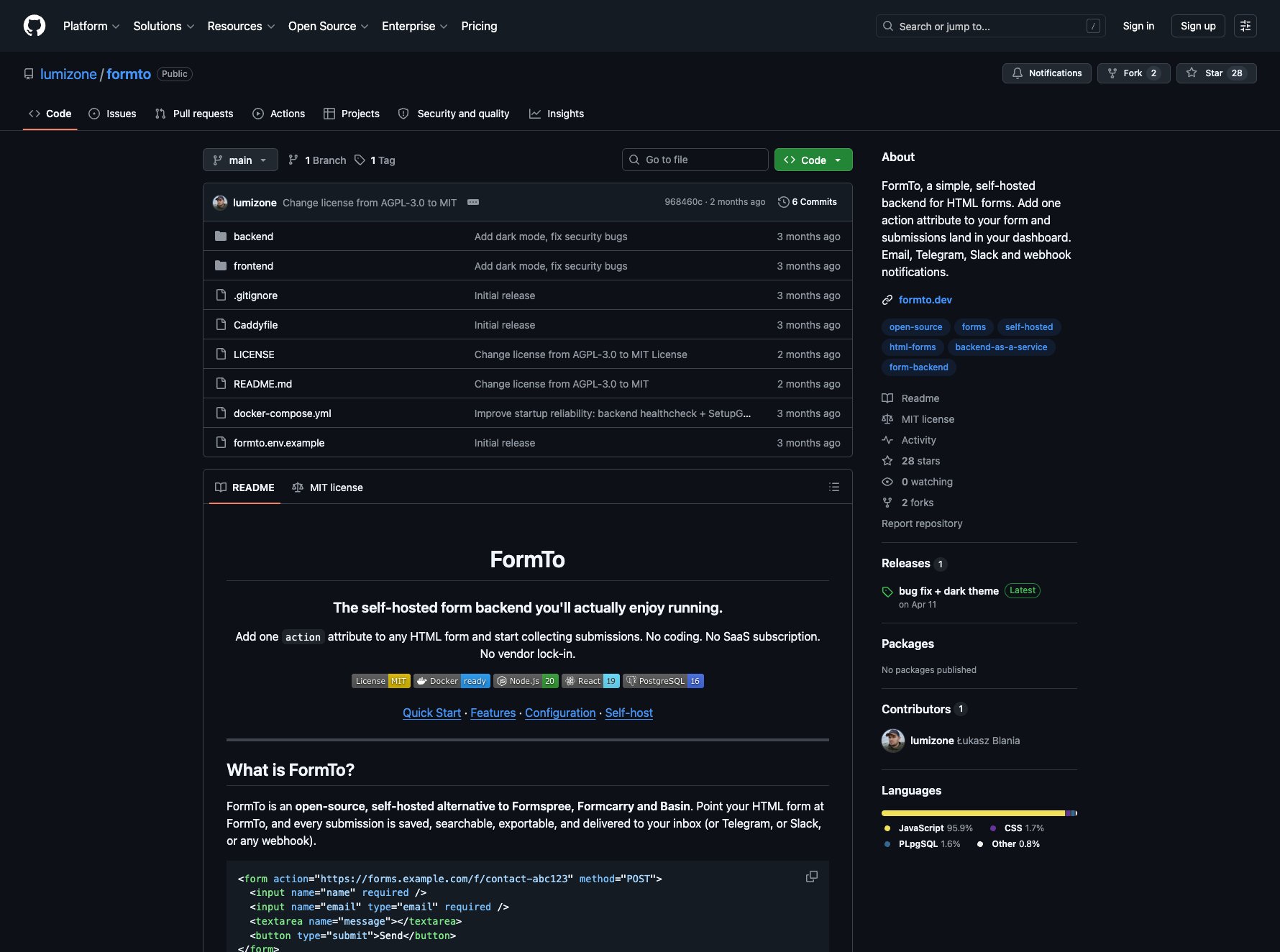
A self-hosted form backend — add one action attribute to any HTML form and submissions land in your dashboard. MIT-licensed, asleep by choice, still running.
- TIMELINE
- V1.1.0 — APRIL 2026
- TYPE
- OPEN SOURCE / SELF-HOSTED
- STACK
- REACT 19 / FASTIFY + NODE 20 / POSTGRESQL 16 / DOCKER + CADDY
- STATUS
- [OPEN SOURCE — MIT]
The itch
Every static site eventually needs a contact form, and every contact form eventually needs a backend. The SaaS options — Formspree, Formcarry, Basin — work fine until you hit the pricing tier wall, the submission cap, or the simple discomfort of your leads living on someone else’s servers.
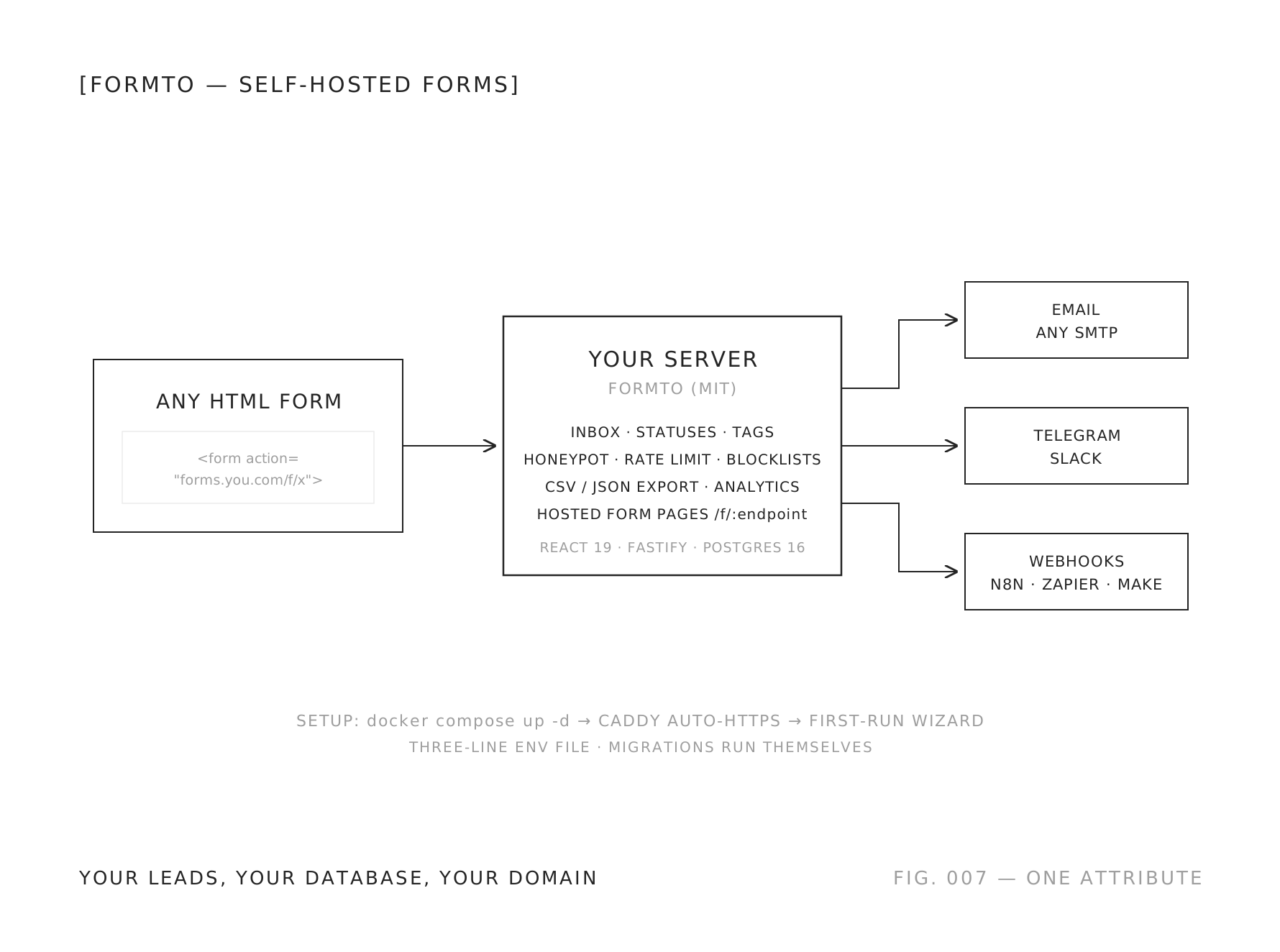
Formto is the self-hosted answer: one action attribute on any HTML
form, and submissions start collecting in your own dashboard, on your own
domain, in your own database. No coding, no subscription, no vendor lock-in.
What’s in the box
More than a dumb inbox:
- Submission management — read/archive/reply, statuses (new / in-progress / resolved), internal notes, tags, search and filters.
- Notifications everywhere — email via any SMTP (Gmail, Mailgun, Postmark, Resend), native Telegram bot, Slack webhooks, and custom JSON webhooks for Zapier, Make, n8n, Discord.
- Spam defense — honeypot detection, rate limiting, IP/email/domain blocking, auto-close after N responses or on a date.
- Data ownership — CSV/JSON export, submission analytics, per-form performance, top-fields breakdown.
- Hosted form pages — no site? Every endpoint gets a standalone form
page at
/f/:endpoint.
Deployment is the product
The whole pitch collapses if self-hosting is painful, so the setup is three
steps: clone, fill a three-line env file, docker compose up -d. Caddy
handles HTTPS automatically via Let’s Encrypt, a first-run wizard does the
rest, and schema migrations run themselves on update.
Who it’s for
- Static sites and JAMstack builds that need exactly one dynamic thing,
- agencies running dozens of small client sites who’d rather pay one VPS bill than thirty SaaS subscriptions,
- anyone with data-locality requirements — the leads never leave a server you control, which makes compliance conversations short.
Boring, auditable choices
React 19 + Tailwind v4 front, Fastify on Node 20, PostgreSQL 16, JWT auth, bcrypt, SSRF protection with DNS pinning, 100% parameterized SQL — the right kind of unexciting for software that holds other people’s leads.
Asleep by choice
I stopped developing Formto — it didn’t take off as a project I wanted to push, and pretending otherwise would cost attention my live products need. But “stopped developing” is not “dead”:
- The code is MIT-licensed on GitHub — fork it, ship it, sell it.
- It runs in production unattended; the last release (v1.1.0, April 2026) added a dark theme and bug fixes.
- Strangers still find it, star it, and deploy it — which is exactly what open source is for.
Of my five shipped products, Formto is the one that’s asleep: useful to others, zero claim on my week. Open-sourcing was the honest way to put it to bed — a public repo teaches somebody something every month; a private one teaches nobody anything.