FROM SOMEONE WHO RUNS ONE FOR 26 CLIENTS
AI Blog Automation for Business: How the Pipeline Works
How a real AI blog automation pipeline works in 2026: research, writing against a brief, a human editorial gate, and publishing. Built by a copywriter, not a chatbot.
Most businesses do not have a content problem. They have a consistency problem. They know a blog helps. They start one, publish four posts in a burst, then go quiet for eight months because the founder got busy and the intern left.
I sell the fix, so I should be upfront about what it is and is not. AI blog automation is not a robot that replaces your marketing. It is a system that does the repetitive 80 percent of publishing on schedule, so the 20 percent that needs a human actually gets done. I run this for 26 clients across ecommerce, pest control, and travel, and the shape of it is always the same.
Here is how a real one works.
Most “AI content” fails because nobody built a system
The failure is rarely the model. It is that people point a chatbot at a blank page and paste whatever falls out.
That gives you text. It does not give you content that ranks, reads like your brand, or survives a fact check. A single prompt has no research step, no house style, no editor, and no schedule. Do that twice a week and you have industrialized mediocrity.
A pipeline is the opposite. It is the same four moves a good content team makes, wired together so they run without anyone remembering to start them.
A real pipeline runs in four stages
The whole thing is a loop: research, write, review, publish. Nothing exotic.
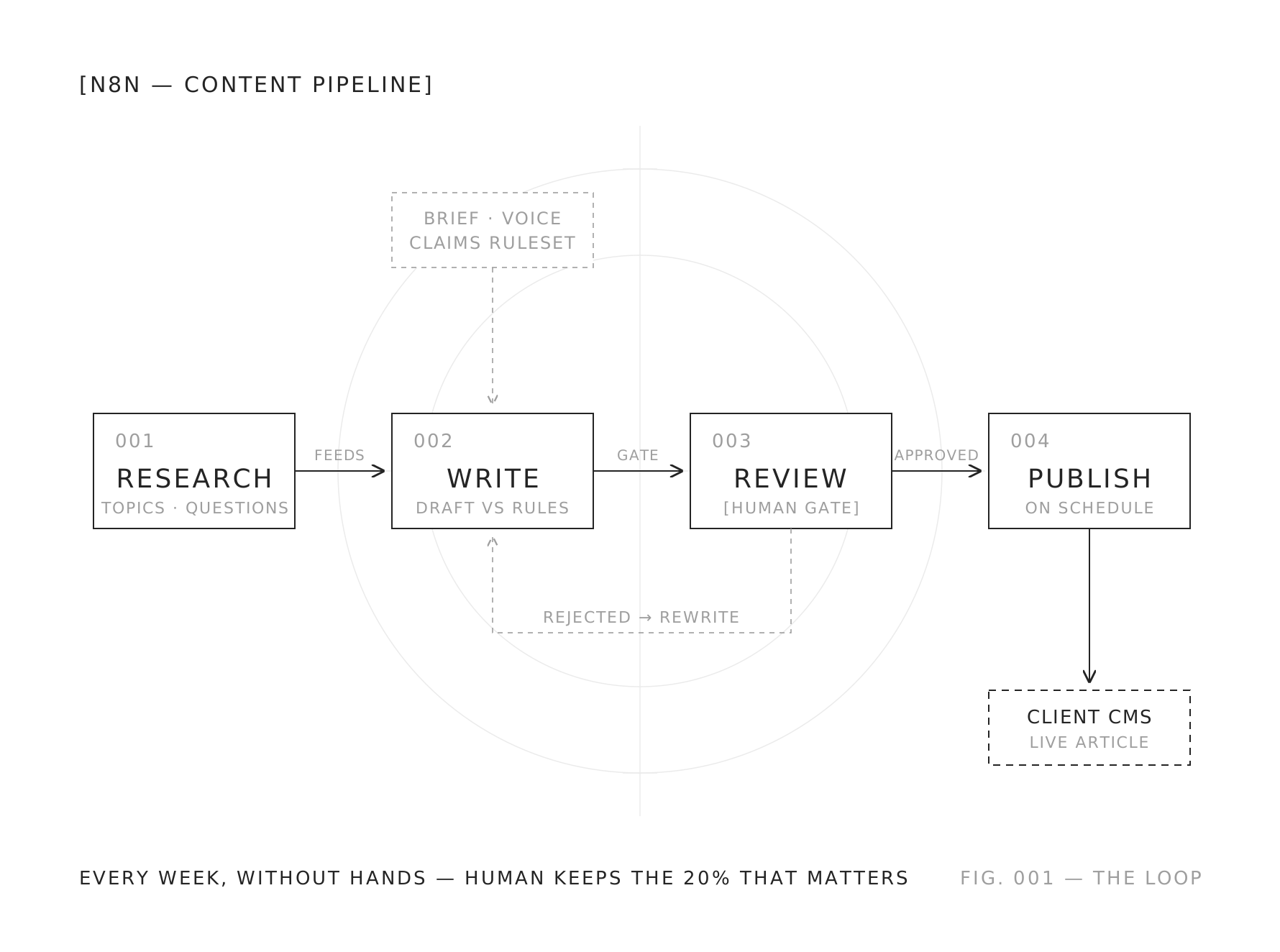
1. Research. Before a sentence gets written, the pipeline gathers what the article needs: the angles worth taking, the questions your customers actually ask, what the top results already cover. This is where the brief comes from, not the model’s imagination.
2. Writing against rules. The draft is generated against a locked brief: structure, tone of voice, the terms you use, and the claims you must never make. In supplements that last list is long, which is exactly why a written ruleset beats ad-hoc prompting.
3. The review gate. Internal links get added, formatting is normalized, and a human can approve, edit, or reject before anything ships. Most weeks this takes minutes. Some weeks it saves you from publishing something dumb.
4. Publishing. The approved article lands in your CMS, formatted, on schedule. Nobody pastes anything anywhere.
Every client gets this wired into their own stack and tuned to their niche. The system is the same. The voice never is.
The human gate is the whole product
Here is the part most automation vendors cannot say: I am a copywriter first. I can write your blog by hand, because I did it for a living before I automated it.
The pipeline exists because I took my own writing process apart and turned it into rules. How an article should be structured. What a claim needs behind it. Where tone slips into hype. So the AI is not “generating content.” It is running my process at scale, and on managed plans I read the output the way your customer will, not the way a model grades its own homework.
That distinction is not a nice-to-have. It is the difference between content that works and content that gets you a manual action. If you are worried about the search side of this, I wrote a separate piece on whether Google penalizes AI content.
Two ways to run it: your system or mine
Not every business wants the same arrangement, so there are two.
Your system (handoff). I build the pipeline, deploy it on your infrastructure, wire it into your tools, and hand it over with documentation. You run it. I stay available with limited support. Nineteen of my twenty-six clients picked this.
My system (managed retainer). I host everything and operate it for you. Two flavors: full-auto, where the system runs and articles get made, or copywriter-checked, where I personally review and polish every article before it goes live. Seven clients run this way today.
The handoff funds the retainer. The retainer keeps me close to real content problems, which is where the next improvement always comes from.
What a typical engagement looks like
I do not promise rankings, because anyone who does is selling you the hype I filter out of articles. But the pattern across current clients is consistent enough to name.
- More inbound inquiries inside the first three months. Content that answers real questions brings people who ask for quotes.
- Better search visibility as more indexed pages show up for more of the queries your customers type.
- Break-even around month two on retainers. From there the pipeline costs less than the traffic and leads it brings in.
Niches differ and these are starting points, not guarantees. The full numbers and the chart live in the service case study.
What you get beyond a workflow
A pipeline on its own is half the job. Both models ship with the rest of it:
- Full integrations with your CMS, analytics, and existing tools
- WordPress configuration, set up and tuned rather than just connected
- Image generation for article graphics
- A free content plan mapping the first topics before we start
- Plain-language documentation of the system
- Unlimited revision rounds, because that is not a billable event
- A monthly performance report: what published, what ranks, what is next
That is the actual offer. Not a magic button, a system with a person behind it. If your blog is empty or full of sludge, the fix is not a bigger prompt. If you want to see the exact pipeline in practice, read the case study, or tell me what you are building.
FAQ
- Is AI blog automation the same as a ChatGPT prompt?
- No. A prompt gives you one draft from a blank page. A pipeline runs research, writes against a locked brief with your tone and claim rules, routes the draft through a human review gate, then publishes to your CMS on schedule. The system is what makes the output consistent and safe to publish.
- Will automated content hurt my SEO?
- Only if it is thin and unedited. Google ranks helpful content regardless of how it was produced. The pipelines I build keep a human editor in the loop, which is the same pattern that produces the strongest results across the industry in 2026.
- How many articles can a pipeline publish per month?
- As many as your review capacity allows. On managed plans where I personally check each article, a common cadence is two to eight posts a month. The bottleneck is editorial judgment, not generation.
- Do I own the system or rent it?
- Both models exist. I can build the pipeline on your infrastructure and hand it over with documentation, or host and operate it for you on a monthly retainer. Nineteen of my twenty-six clients chose the handoff.
- Which niches does this work best for?
- Businesses with real questions to answer and no time to answer them. I run pipelines daily for ecommerce (peptides and sport supplements), pest control services, and travel services. Boring niches with specific, factual content win the most.