THE QUESTION EVERY CLIENT GOOGLES FIRST
Will Google Penalize AI Content? A Straight Answer
Google does not penalize AI content for being AI. It penalizes unhelpful content. Here is what the 2026 data shows and how the human-in-the-loop workflow stays safe.
Every client asks me this before they sign, usually in the first call: will Google punish us for using AI? It is the right question and the answer is not the scary one.
Google does not penalize AI content for being AI. It penalizes content that does not help anyone. Those are different things, and confusing them is what keeps businesses either paralyzed or reckless. Here is the actual state of it in 2026.
Google targets unhelpful content, not the tool that made it
Search guidance rewards content that is helpful, accurate, and made for people. It says nothing that bans AI as a tool. What gets a page demoted is being thin, generic, or wrong, whether a human or a model produced it.
So the framing “AI content versus human content” is the wrong axis. The real axis is useful versus useless. A model can write a genuinely helpful guide. A tired human can write filler. Google is trying to sort helpful from useless, not silicon from carbon.
The 2026 numbers say the web already crossed over
This stopped being a fringe practice. It is now how most of the web gets written.
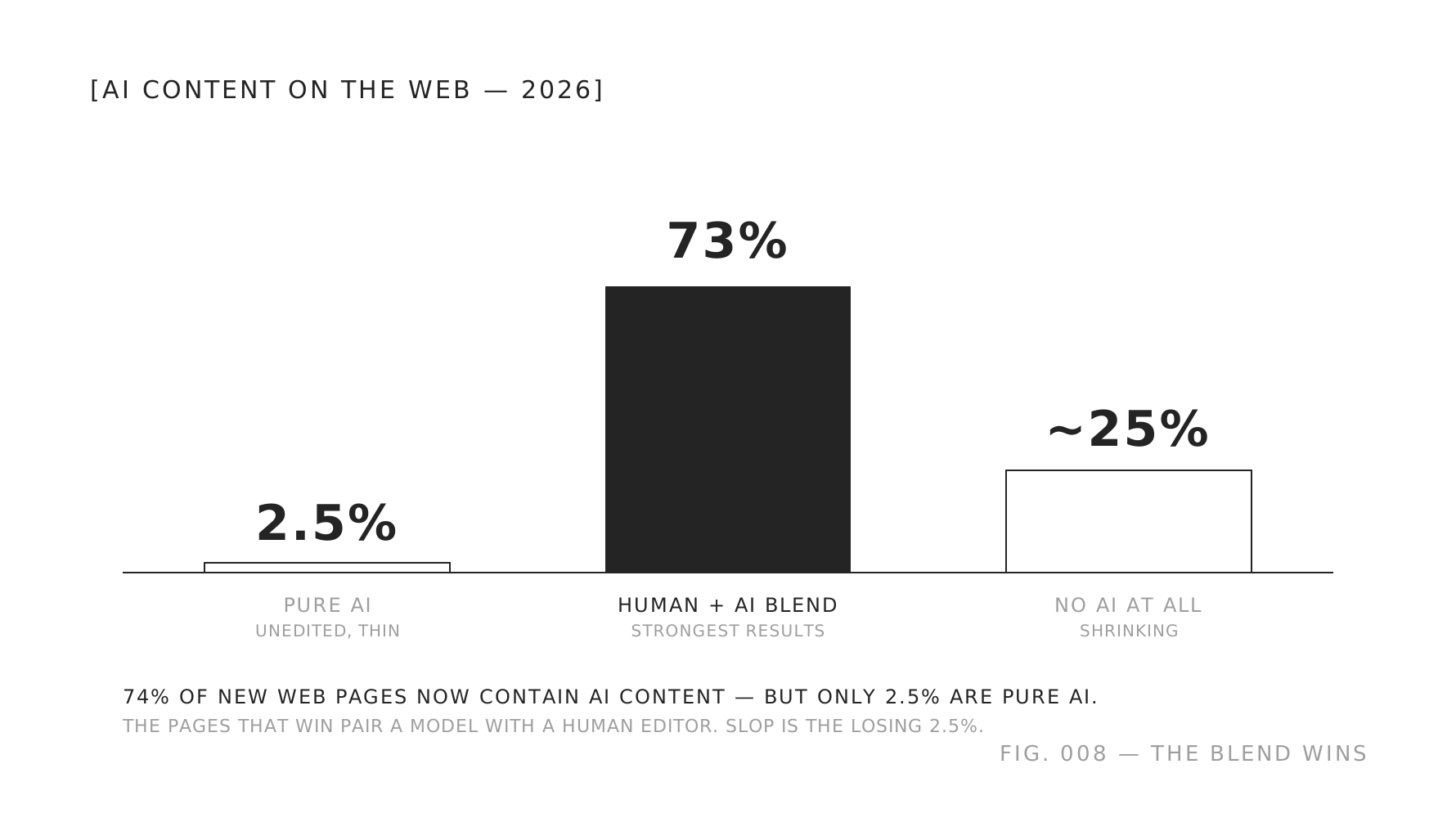
The public data for 2026 is clear. About 97% of marketers plan to use AI for content this year. Roughly 74% of newly published web pages now contain AI-generated content. But only about 2.5% of those pages are pure AI. The large majority blend AI with human writing, and that blend is the group producing the strongest results.
Read that twice. The losing category is not “used AI.” It is “used AI and published it raw.” That thin 2.5% is the slop everyone pictures when they hear “AI content.” It is also the easy part to avoid.
The safe workflow is human-in-the-loop
The pattern that ranks is simple to describe and easy to skip: AI drafts, a human edits, a human approves, then it publishes.
That review step is not decoration. It is where facts get checked, claims get pulled, tone gets fixed, and internal links get added. It is the difference between the 73% that works and the 2.5% that gets you a manual action. I wrote more about why the editorial gate matters in how the pipeline works.
In my pipelines the gate is a hard requirement, not a setting. On managed plans I read every article the way your customer will before it goes live, because I was a copywriter before I automated one. No auto-publish of unreviewed drafts. Ever.
What this means for your blog
If you are avoiding AI entirely to stay safe, you are leaving speed on the table for a risk that does not exist. If you are auto-publishing raw output to move fast, you are the 2.5% that actually gets hurt.
The move is neither. Use AI for the heavy lifting, keep a human at the gate, and publish content that earns its ranking on merit. That is the whole trick, and it is exactly what a proper content pipeline is built to enforce. If you want that gate run by an actual copywriter, let’s talk.
FAQ
- Does Google penalize AI-generated content?
- No. Google's guidance targets unhelpful, low-value content, not the tool used to make it. AI content that is accurate, original, and genuinely useful can rank. Thin AI content pasted from a chatbot cannot, and neither can thin human content.
- Can AI content rank on Google in 2026?
- Yes, and most of it already involves AI at some stage. Roughly 74 percent of newly published web pages contain AI-generated content. The ones that rank are edited and fact-checked by a human, not published raw.
- How does Google detect AI content?
- It largely does not try to, and does not need to. Google evaluates whether a page is helpful, accurate, and satisfies the search, using signals like experience and trust. Chasing an AI-detector score is the wrong goal. Making the page genuinely better is the right one.
- What is the safest way to use AI for blog content?
- Human-in-the-loop. Use AI for research and drafting, then have a person edit, fact-check, and approve every piece before it publishes. That keeps quality up and keeps you clear of the thin-content problem that actually gets penalized.