BUILD IT YOURSELF, OR SKIP TO THE END
n8n Content Automation: Build a Blog Pipeline
How to build a blog content pipeline in n8n: the stages, the filter for what to automate, and what breaks at scale. From someone who runs 26 of them in production.
n8n is my tool of choice for content automation, and I get asked a lot how the pipelines are built. So here is the real architecture, not a demo. If you want to build your own, this is enough to start. If you get halfway and decide you would rather buy it, that is a fine outcome too, and I will tell you exactly where most people stop.
First, the filter: should this even be automated
Before you open n8n, run the process through three questions. If it fails any of them, do not automate it yet.
1. Does it repeat on a schedule? Weekly articles, yes. A one-off launch page, no. Frequency is what pays back the build.
2. Can you write the rules down? If the person doing the task can explain their decisions on one page, a machine can follow them. If the answer is “it depends, I just know,” that part stays human.
3. Is a mistake survivable? A bad draft caught by a review gate costs you a minute. A bad draft auto-published to your homepage costs you more. Build the gate before you build the speed.
Content passes all three, which is why it is my main business. It repeats weekly, the rules can be written down, and a review gate catches the misses. Automating a process that does not pass this filter just gives you a faster mess.
The four stages in n8n
A working pipeline is a loop, and n8n maps onto it cleanly.
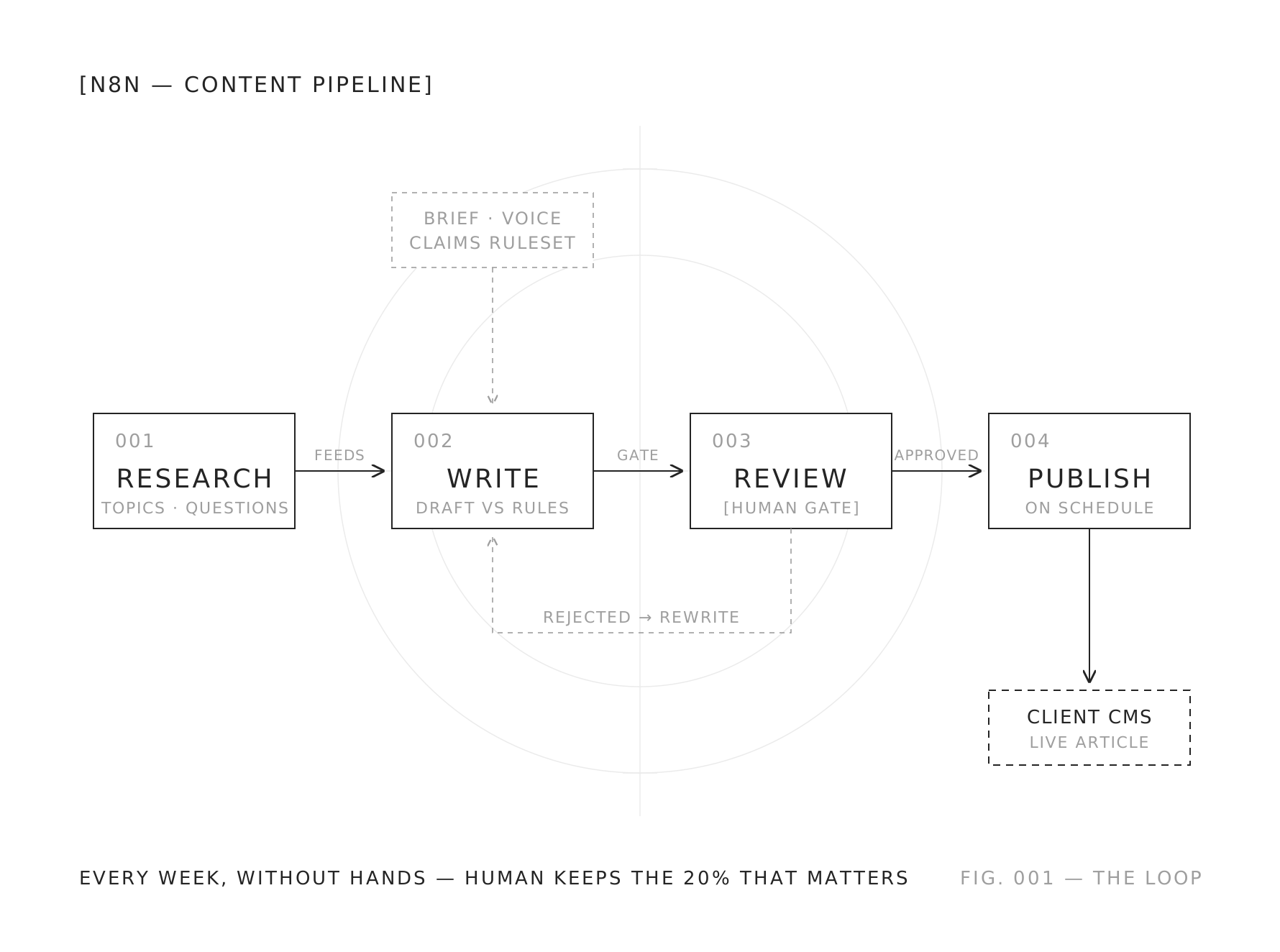
Research. HTTP nodes pull the raw material: the questions people ask, what the top results cover, the facts the article needs. Store it so the draft step has a real brief, not a blank prompt.
Draft against a brief. A model call generates the draft, but constrained: structure, tone rules, the terms the client uses, the claims to avoid. The brief lives in the pipeline, not in someone’s head. This is the single biggest quality lever.
Human review. Route the draft somewhere a person can approve, edit, or reject. This is not optional. It is the step that keeps you out of the thin-content problem that actually gets penalized.
Publish. A CMS integration pushes the approved article live, formatted, on schedule. WordPress, most headless CMSs, whatever you run.
What actually breaks
The demo is easy. Anyone can wire four nodes and generate one post. The reliable version that runs daily for months is a different animal, and this is where most DIY builds stall.
- Rate limits. Model and API quotas will bite under real volume. You need retries and backoff, not a happy-path build.
- Output drift. Models wander off the brief over time. You need checks that catch a draft that ignored the rules.
- Formatting on publish. The article looks fine in the model and breaks in the CMS. Formatting is its own boring problem.
- The missing gate. The most common failure is no human review, so the day a draft goes wrong, it goes live. Build the gate first.
None of this is exotic. It is just the unglamorous 80% that separates a toy from a system, and it is why “I built a content bot in an afternoon” rarely survives to month three.
Build it, or hire the one that already runs
If you have the time and your process is documented, build it. n8n is the right tool and the four stages above are the whole map. Start with one client or one section of your own site, get the gate working, then add volume.
If you would rather have it running next month, tuned to your niche, that is what I do. I can build the pipeline and hand it over on your own infrastructure, or host and operate it for you. Twenty-six businesses run one of these today. If you want to compare building versus buying for your case, tell me what you publish.
FAQ
- Can you build a content pipeline in n8n?
- Yes. n8n is well suited to it: HTTP nodes for research and model calls, a data store for briefs and state, a review step, and a CMS integration to publish. The four stages are research, draft against a brief, human review, and publish.
- What should you automate first in content?
- Automate the repetitive middle: research gathering, first-draft generation against a locked brief, formatting, and publishing. Keep strategy, positioning, and final approval human. Automate the 80 percent that is mechanical, not the 20 percent that needs judgment.
- Is it better to build your own or hire someone?
- Build it if you have the time and want to own it, and your process is already documented. Hire it if you want it running next month and tuned to your niche. I offer both: a handoff build on your infrastructure, or a managed pipeline I host and operate.
- What breaks in a content pipeline at scale?
- The unglamorous parts: API rate limits, model output that drifts from the brief, broken formatting on publish, and no human gate so bad drafts go live. A demo pipeline is easy. A reliable one that runs daily for months is mostly error handling and guardrails.