NOTES FROM THE LAUNCH QUEUE
Postsider: One Meta Review Away From Launch
Postsider is built, security-audited, and deployed. The only thing between it and a public launch is a platform app review. Notes from the launch queue.
Postsider has been code-complete for weeks. It is security-audited and running on production infrastructure. It is not launched.
The gap between those sentences is the part nobody warns you about, and it is exactly where I am standing right now: one platform review away from turning it on. Here is what that final mile actually looks like, because it is nothing like writing the software was.
The code has been done for weeks. The gatekeepers are the holdup
Postsider is feature-complete, deployed on its production server, and running for a handful of beta users. What stands between it and a public launch is not engineering.
The app does what it says: a calendar, queues, per-network previews, bulk CSV import, an approval workflow, a post checker that catches per-network rule breaks before you publish, and caption rewriting that reshapes one idea for each platform. It publishes to more than 30 networks. All of that works today.
Before I let real strangers near it, I ran a security-hardening pass, which is the kind of work you do right before you expose something, not before. It found real things. Activation and password-reset tokens could be replayed as sessions that never expired, so I pinned those down to require an expiry. The per-IP rate limiter had quietly collapsed into a single global bucket, because behind two nginx hops every request looked like it came from the proxy instead of the visitor. And I bumped a dependency with a denial-of-service bug in its file-type sniffer. Tests green, migrations apply on a real database, it boots clean. The engineering is ready to meet users.
Platform review is the gate nobody warns you about
To publish to Facebook, Instagram, Threads, or TikTok on a user’s behalf, each network has to approve your app for advanced permissions first. That approval is a review process, and it is where the launch timeline actually lives.
You do not just call an API. You request elevated permissions, the ones that let you post content and manage pages, and the platform makes you prove you use them responsibly before it flips them on. In practice, over the last few weeks, that meant:
- Screencasts of every permission in use, in English, as
.mp4H.264, uploaded as a file. An.mkvstraight out of OBS gets rejected, and there is no field to paste a Loom link. - Handing reviewers the exact legal pages, with trailing slashes. My site sends
/privacyto/privacy/with a redirect, and a reviewer reads that redirect as “the URL did not go to your privacy policy” and bounces the entire submission. So you learn to give them/privacy/and/data-deletion/spelled out. - Building a dedicated data-deletion instructions page, because Meta will not review you without that URL.
- Pointing the “Website URL” at the marketing homepage, not the app login. Aim it at the login screen and TikTok and Meta demand a working test account before they will even start.
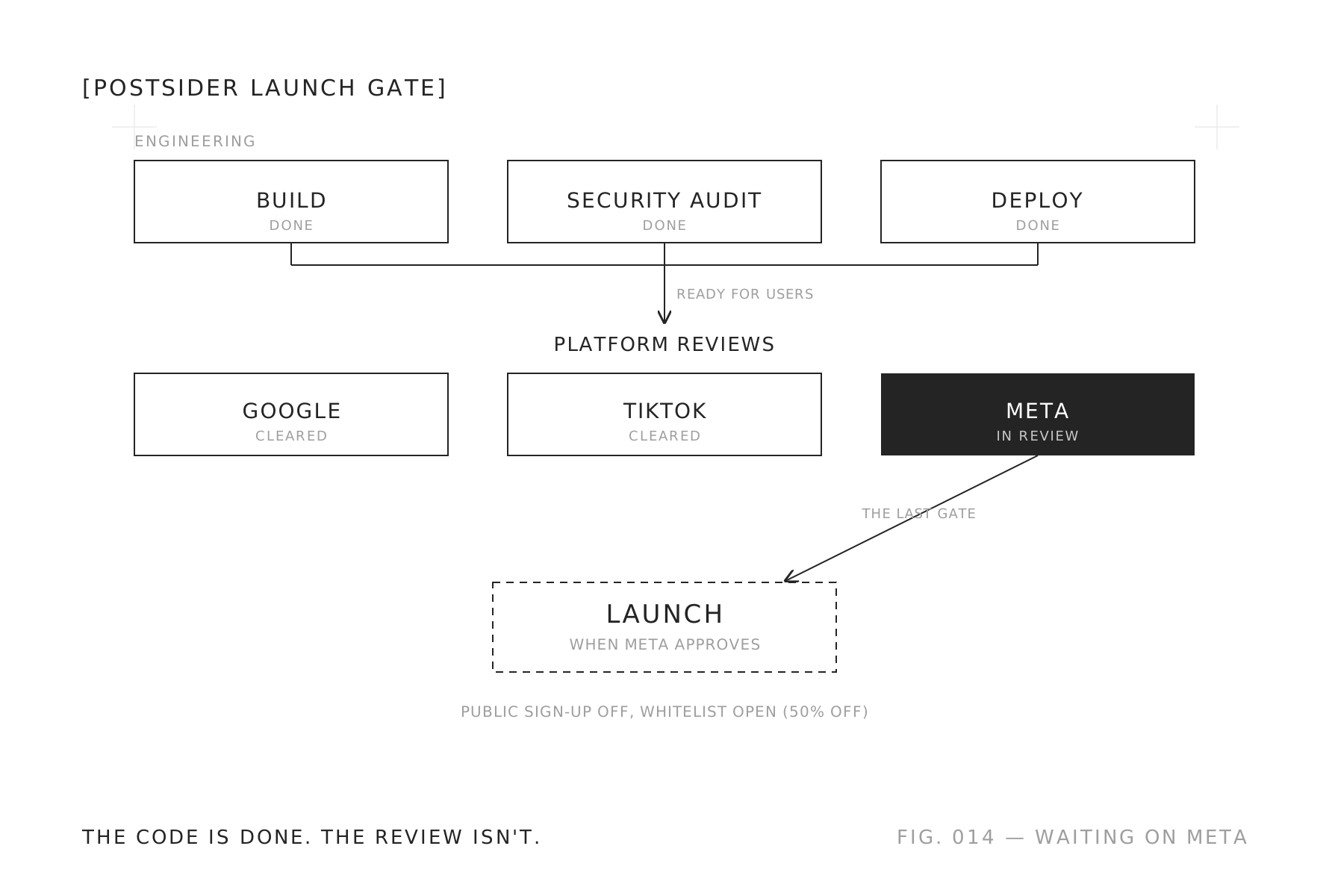
As of last week I had Google, Meta, and TikTok all resubmitted and waiting. Google and TikTok have come back. Meta is the one still in the queue, and it is the last thing on the list.
Why an agent-native tool still has to clear the reviews
Postsider is built for two users at once: a person at a calendar, and an AI agent with an API key. Agents drive it over MCP, REST, and a Node SDK, and whatever they queue can route through a human approval step before it goes out. An agent proposes, a person approves, the system publishes.
That design is the whole bet. Automated pipelines and agents can already write and plan a month of content. What they cannot safely do is post it to a dozen networks with your brand on the line, so the approval gate in the middle is the point, not a feature I bolted on. It is automation that never takes its hands fully off the wheel.
But here is the thing the agent angle does not change: the moment you publish to Instagram on someone’s behalf, Meta wants to know who you are, whether the thing pressing the button is a human or a script. So being agent-native buys you exactly zero shortcuts through the review queue. It just means what is waiting on the other side of the approval is worth the wait.
One codebase, cloud or self-hosted
Postsider is one open-source codebase under AGPL. The same build runs as the managed cloud at postsider.com and as a self-hosted install via Docker, switched entirely by environment variables.
I built it that way on purpose. Set a billing key and it runs as the hosted product with plans and limits. Leave that key out and it runs unlimited for anyone self-hosting it. The AI features use a platform key on the cloud, or your own key when you self-host. Social connections read per-provider credentials, so a self-hoster registers their own platform apps and, yes, does their own version of the review gauntlet above. The code is public.
I like shipping it this way for the same reason Local Waifu runs entirely on your own machine. If you would rather own the tool than rent a seat in someone else’s account, you should be able to. It is the same instinct applied to a very different product, and it is the least hype-driven thing I can say about a piece of software: here is the source, run it yourself if you want to.
What is left, and how to get in early
The infrastructure is live. The beta is small and closed on purpose, public sign-up is off and I add users by hand, so the five people in it get real founder support instead of a landing page. There is a whitelist for the public launch, and everyone on it gets 50% off.
When Meta signs off, I flip a flag and it opens. That is genuinely the last step, which is a strange place to be after months of building: the hard technical work is behind me, and the release date belongs to a reviewer I will never meet.
Postsider grew out of my client automation work. Once a pipeline writes the content, actually posting it across networks is still the manual last mile, and that gap is the product. If you want in before launch, join the whitelist. If you would rather read the longer story of building a Buffer competitor solo, the case study has it.
The code has been ready for weeks. I am waiting on a stranger at Meta to click approve. That is what launching software looks like in 2026.
FAQ
- What is Postsider?
- A social publishing platform for two kinds of users: people with a content calendar, and AI agents with an API key. Both post to 30+ networks through the same approval gate, over a dashboard for humans and MCP, REST, and an SDK for machines.
- Is Postsider live yet?
- Not publicly. It runs in a small closed beta on production infrastructure while the last platform app review clears. There is a whitelist for the public launch, with 50% off for everyone on it.
- Why does launching a publishing tool take so long if the code is done?
- Because posting to networks like Facebook, Instagram, and TikTok on a user's behalf needs the platform to approve your app for advanced permissions. That review means screencasts, specific legal URLs, and re-submissions, and it runs on the platform's timeline, not yours.
- Can I self-host Postsider?
- Yes. It is one open-source codebase under AGPL. The same build runs our managed cloud and a self-hosted install via Docker, switched entirely by environment variables. Self-hosting removes the plan limits; you bring your own API keys and OAuth apps.
- Can AI agents post through Postsider?
- Yes, that is the point. Agents drive it over MCP, REST, or the Node SDK, and everything they queue can route through a human approval step before it publishes. An agent proposes, a person approves, the system posts.